Why install unfinished wood
Prefinished floors come out of the box with their finish already on. It’s a hard finish, and every board has a bevel along its edge so small height differences don’t show. What you get is a floor made of many separate pieces, with a groove at every edge to catch dust.
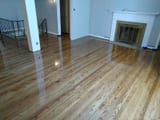
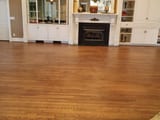
Unfinished wood goes in as one surface, then gets sanded flat and finished on site. No bevels, no height differences, and a color mixed for your house instead of picked from a chart.
Matching an older floor
This is where site-finished wood earns its keep. When an addition, a kitchen remodel or a repaired section meets a floor that’s been there for decades, new prefinished boards will never match it. New unfinished boards can be woven in beside the old ones, and then the whole thing is sanded and finished as one floor. Old and new share the same stain and the same sheen.
How wood gets installed
It depends on what’s underneath. Over a wood subfloor, solid hardwood is nailed down through the tongue. Over concrete, engineered wood is usually glued down. Wider planks often get both glue and nails, because a wide board can cup on its own.
Below grade, in a basement, solid wood is a poor idea because of moisture coming up through the slab. And every wood floor needs room to move: a gap around the walls hides under the baseboard and lets the wood swell in summer.
Let the wood sit in the house first
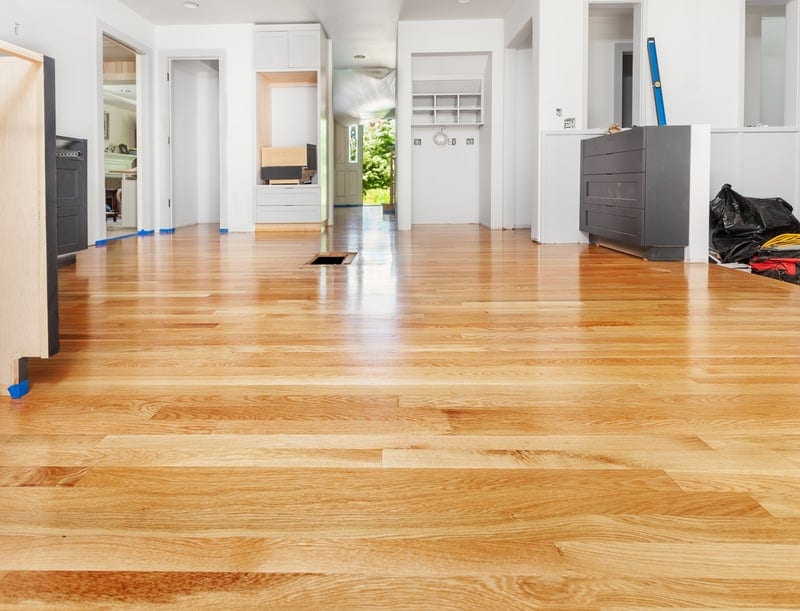
Wood takes on the humidity of the room it’s in. New flooring that goes straight from the truck to the floor may shrink or cup later as it adjusts. Solid wood usually needs several days inside the house before it goes down, longer in wet weather.
Good installers check the moisture in the wood and in the subfloor before the first board goes down. Skip that step and the floor tells on you a season later.
Choosing wood
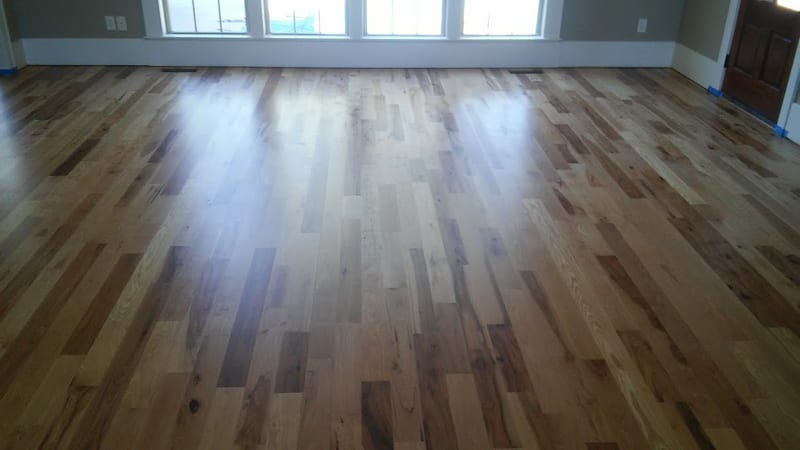
Species sets the look and the hardness. Oak is the standard around here: strong, easy to stain, easy to repair. Hickory is harder and has more color change from board to board. Walnut is darker and softer. Pine is soft; it dents, and a lot of people like the wear.
Width matters too. Narrow strip floors, about two and a quarter inches wide, suit a small room and hide movement well. Wide planks, five inches and up, look calm and show more seasonal change. Grade decides how much character you get: clear grades are uniform, and common grades keep the knots and mineral streaks.
After installation
Newly installed unfinished wood gets the same treatment as an old one: sanded in place, stained if you want color, then sealed and finished. The floor is ready for furniture a few days after the last coat and hardens fully over the next few weeks.
Big furniture, appliances and rugs wait the longest. If you’re building or remodeling, the floor goes in after the drywall, paint and tile are finished, so nothing heavy rolls across a fresh surface.