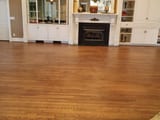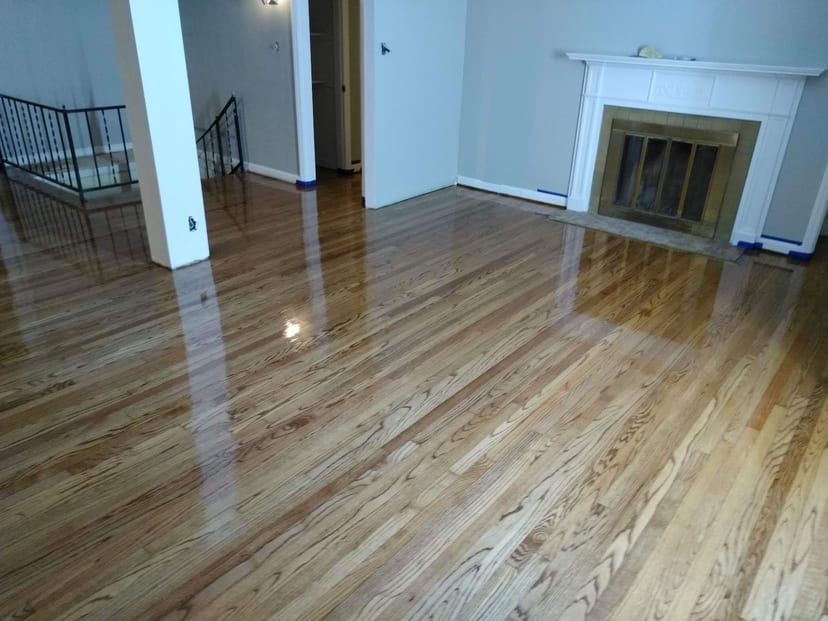
When a floor needs refinishing
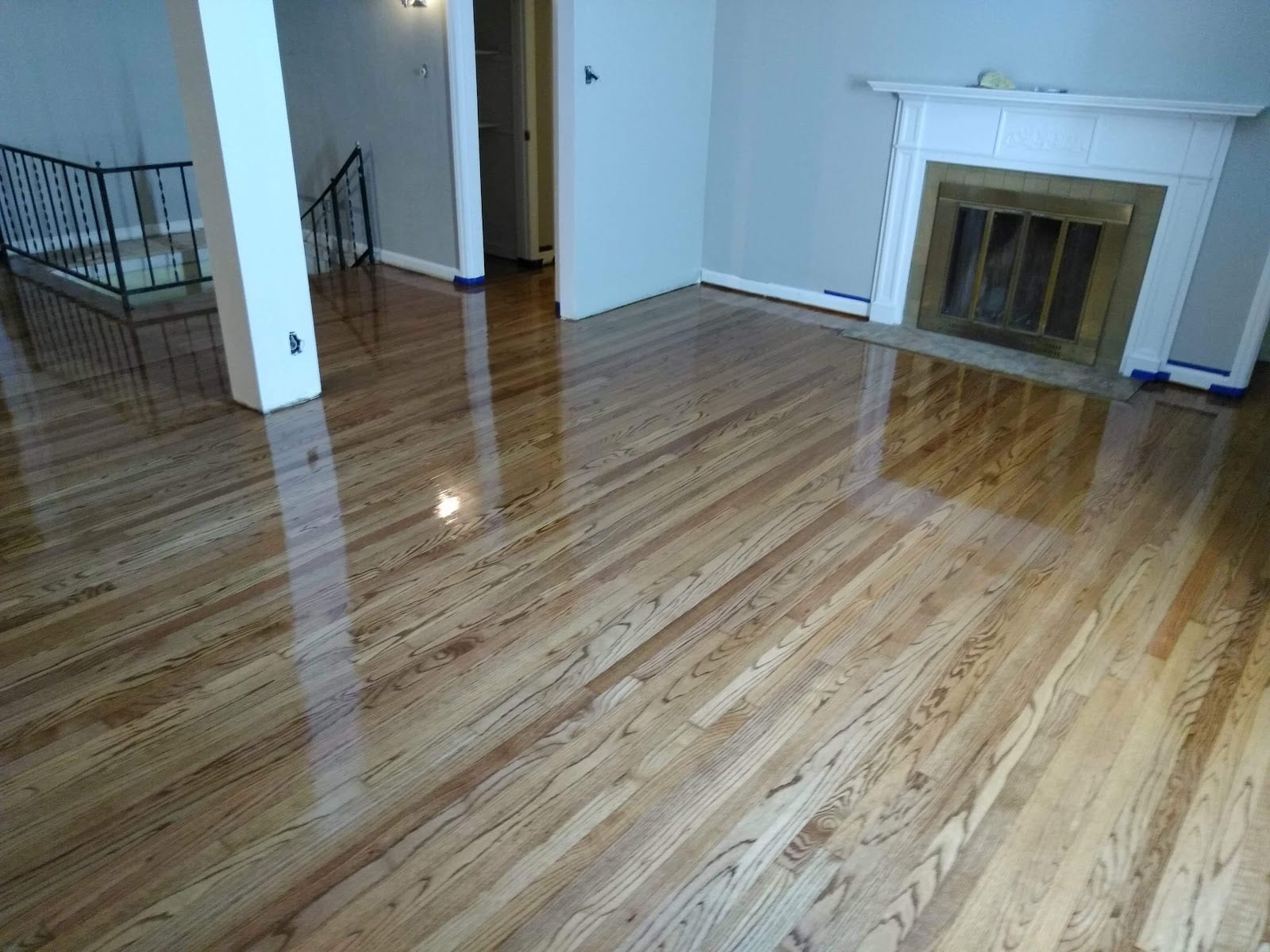
If the finish has worn through in the walking paths, the floor looks gray or dull no matter how you clean it, or scratches go past the shine and into the wood, it’s time. A floor in that shape isn’t dirty. The protective coat is gone, and every mopping after that is working on bare wood.
What happens during a refinish
First the floor gets sanded. A drum or belt sander takes the main field in long passes, and an edger handles the border the big machine can’t reach. Coarse grit cuts through the old finish. Finer grits follow until the marks from the pass before are gone.
Then comes repair. Loose boards get secured, gaps and nail holes get filled, and boards that are split or stained all the way through get cut out and replaced. This is easiest on bare wood, before any finish goes down, because everything gets sanded flat together.
After that comes color, if you want one. Last is the finish: two or three coats of polyurethane or another topcoat, with a light buff and a thorough cleaning between each one.
How long it takes
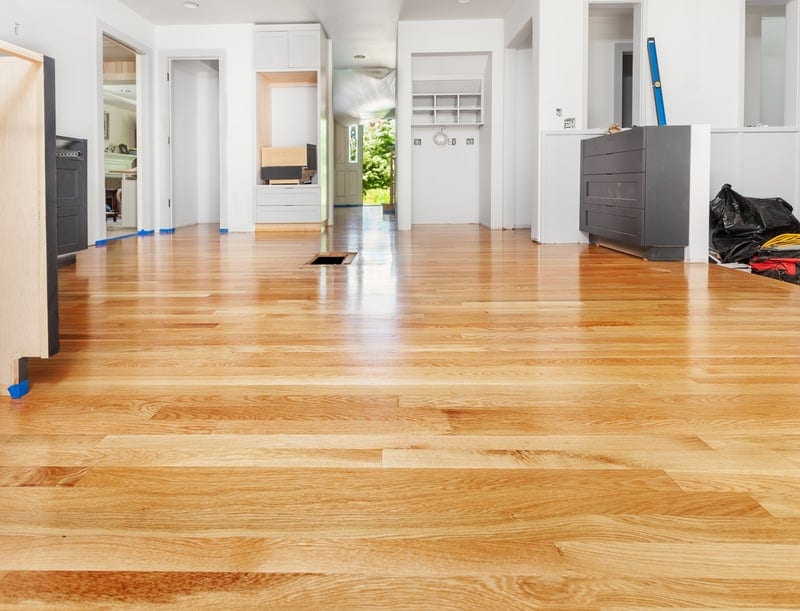
Nobody can give you a real schedule without seeing the floor, but the shape of the job is usually the same. One room runs a few days. A whole house runs most of a week.
Most of that time is waiting. Waiting for stain to dry, waiting between coats, waiting for the last coat to get hard enough to walk on. The sanding itself is the fast part. Water-based finishes dry faster than oil-based ones, and humid weather slows everything down. Plan on having the rooms out of use for that whole stretch, plus a few days after the last coat.
Can you stay in the house?
Usually, yes. The rooms being worked on are off limits, and the rest of the house is yours. The hard part is the last night or two, when the final coat is down and nothing can touch it. Some people stay with family that night. Oil-based finishes also have a strong smell while they cure, which matters more to some households than others.
Dust, and what to expect
Sanding wood makes fine dust. Containing it is part of the job: sealing off doorways, covering vents, catching it at the machine. Even so, no sanding job is completely dust free. Anything left out in the room will get a film on it. Cover what you can’t move and expect to wipe the room down afterward.
How many times can a floor be sanded?
A solid wood floor can be sanded several times over its life, because there’s a lot of wood above the tongue. Engineered floors have a thin wear layer on top of plywood, and some can only be sanded once or twice, or not at all. A floor that has already been refinished a few times may be at its limit. That’s one of the first things we check.
Refinishing or screening
If the finish is dull but intact and the color is right, the floor may only need a screen and recoat. The old finish gets lightly abraded and one or two new coats go on top. It doesn’t remove scratches that reach the wood, and it can’t change the color. The FAQ explains how to tell the two apart.