Why sanding can’t be skipped
Finish doesn’t stick to finish. A new coat over an old one peels, flakes, or just sits there looking dull, because the old surface has wax, polish or cooking oil on it that nothing bonds to. Sanding takes everything off down to clean wood, which is the only surface a new finish can grip.
It also levels the floor. Years of wear leave dips, raised edges along the boards and heel marks. Sanding across the whole floor cuts it to one flat plane, so light runs across it without shadows.
How sanding goes
Coarse grit first, to remove the old finish. Medium next, to take out the deep scratches the coarse grit left. Fine last. A floor is done when the scratches from the grit before are gone, not when it looks clean.
The last grit is chosen for what comes next. Sand too fine and the grain gets polished closed, which can leave a stain blotchy. Edges, corners and the strip under the cabinets get done with smaller machines by hand, and the floor is vacuumed between every step.
Choosing a stain color
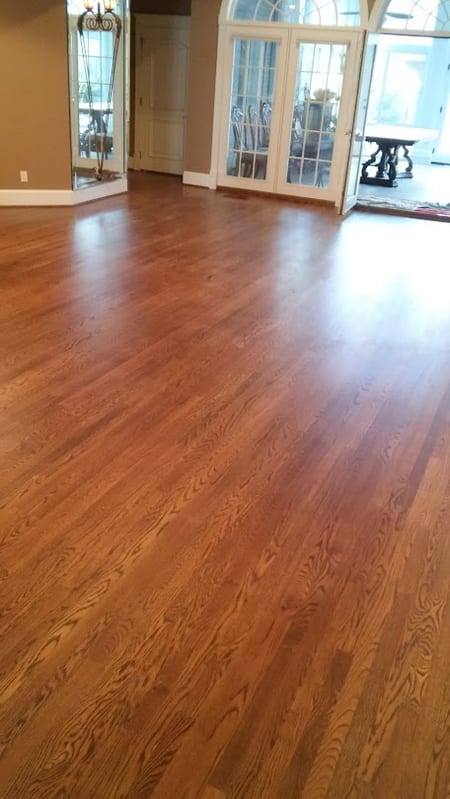
This is the fun part and the risky part. Stain looks different on every species. Oak takes stain evenly. Woods like pine, maple and birch have areas that soak up stain at different rates, so the same color can come out patchy.
A few things help:
- Test the color on your own floor. A stain chip in a store is printed on someone else’s wood.
- Look at it in the room’s light, in the daytime and again at night.
- Go one step lighter than you think you want. Stain reads darker across a whole floor than it does on a small sample.
- Darker stains show dents, dust and scratches more easily. A satin sheen instead of gloss softens that.
Natural, or no stain at all
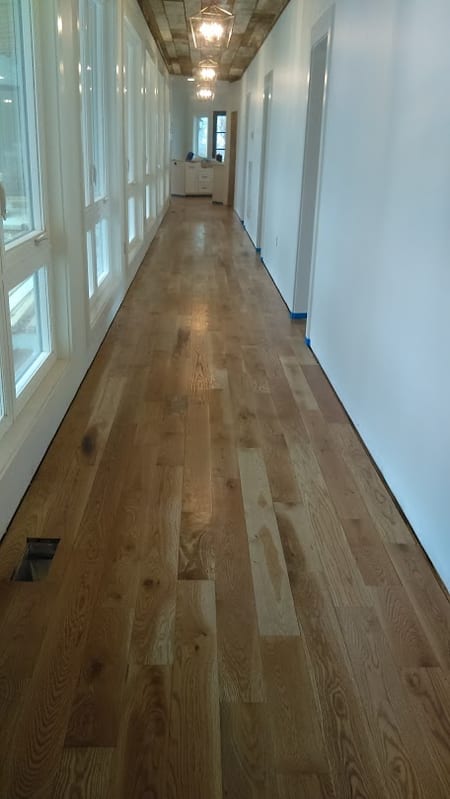
Plenty of people skip stain. A clear finish over bare wood shows the color the tree grew, and it’s lighter and more varied than any stain. It’s also the choice that hides scratches best over the years, because there’s no layer of pigment to scratch through.
Sealing and finishing
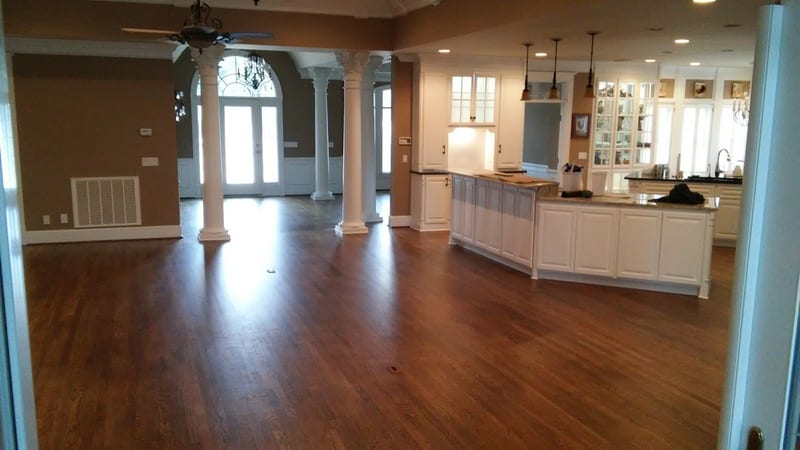
Stain needs a day or more to dry before it gets sealed, depending on the product and the weather. Then the finish goes on in two or three coats. Oil-based polyurethane adds a slight amber tone that deepens over the years. Water-based stays clear and dries in hours instead of a day.
What stain can’t do
It can’t make one species look like another, and it can’t cover damage. Dents, gaps and deep scratches will still be there, in a darker color. If the floor needs board work, that happens before the stain.